
What is SF₆? The Cornerstone Component of Modern Energy
Sulfur hexafluoride (SF₆) is a synthetic compound characterized by a precise molecular geometry: a central sulfur atom surrounded by six fluorine atoms. This specific chemical architecture generates a gas endowed with exceptional thermal and chemical stability.
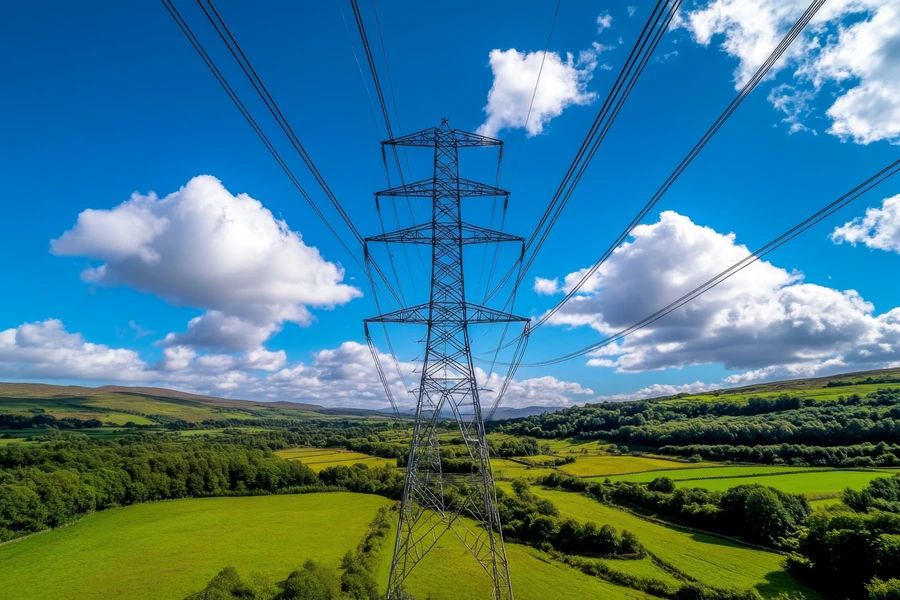
In the electrical sector, SF₆ is the enabling element of the grid. Thanks to a dielectric strength approximately 2.5 times higher than that of air, combined with its inert and non-toxic nature, it represents the absolute technical reference for insulation and electric arc interruption. It is the fundamental engineering resource that allows modern high and medium voltage switchgear (GIS/AIS) to operate, ensuring maximum safety and reduced footprints.
However, the extreme stability of its molecule translates into a severe environmental challenge: if released, the gas persists in the atmosphere for millennia. As one of the most potent greenhouse gases, its use demands the utmost management rigor. At Synecom, we resolve this duality: we guarantee utilities the use of this indispensable technical resource, integrating it within a closed, traceable, and zero-emission lifecycle.
SF₆ Lifecycle Management: Turning a Critical Asset into a Sustainable Process
Although SF₆ remains the core component of high-voltage grids, its extraordinary engineering performance carries significant environmental responsibility. As a high-potential greenhouse gas, its use requires the highest operational rigor.
In the absence of controlled management, this technical resource can turn into a liability and compromise corporate sustainability targets:
- Global Warming Potential (GWP): approximately 24,300 times higher than CO₂.
- Atmospheric Persistence: over 3,000 years of permanence in the environment.
- Emissions into the Atmosphere: being an uninflammable, colorless, and odorless gas, undetected micro-leaks represent a concrete risk for the future of the atmosphere and can lead to sanctions if not rectified within the times prescribed by law.
Synecom provides the engineering skills necessary to govern this complexity. We oversee the entire lifecycle of the gas, eliminating environmental risks and ensuring that electrical infrastructure maintains the highest performance levels, in total compliance with climate regulations.

24,300 times higher than CO₂. Sound abstract?
Let’s make it real: Releasing just 10 grams of SF₆ has the same climate impact as emitting 243 kg of CO₂.
In practical terms, it is equivalent to the emissions generated by driving a standard car non-stop from Milan to Berlin (1,500 km).
The Reality of Emissions in the SF₆ Lifecycle
Leaking does not occur exclusively in the event of equipment failure: it happens continuously and silently along the entire value chain. Sector studies demonstrate that cumulative emissions, calculated over the entire lifecycle of a single molecule, reach 15.68% in the best-case scenario and soar up to 27.30% in the worst-case scenario:
| Lifecycle Phase | Emission Impact Rate |
|---|---|
| Gas Production & Sourcing | 0.38% – 10.0% |
| Equipment manufacturing and commissioning | 8.6% |
| Plant operation, maintenance, and decommissioning | 4.7% |
| End-of-Life Gas Disposal | 2.0% – 4.0% |
The Operational Threat:
Handling and Disposal Challenges
A large part of SF₆ atmospheric losses is attributable to inefficient handling practices and the lack of specialist training during interventions. Added to this is the end-of-life challenge: traditional incineration produces large amounts of CO₂ and causes further dispersion of SF₆ gases into the environment.
The Synecom Model
To neutralize these operational risks, Synecom exclusively employs molecular-tight fittings, high-precision diagnostic instrumentation, and highly qualified technicians. Given the inefficiency and high carbon intensity of old destruction processes, industrial SF₆ regeneration ceases to be an operational alternative and transforms into a global sustainability imperative.

The New Regulatory Constraint
The legislative landscape has officially changed. Pursuant to EU Regulation 2024/573, the use of virgin SF₆ gas is subject to a strict and progressive elimination throughout the energy sector, with staggered bans for new installations.
For grid operators, the message is clear: the use of virgin product is being banned for new plants and, starting from January 1, 2035, it will be formally prohibited to use it even for routine maintenance and repairs, except for very rare technical or emergency exceptions. To keep existing infrastructures running in full compliance, utilities must start the strategic transition toward recycled or industrially regenerated SF₆ today.

Certified Gas Supply
We supply both virgin and industrially regenerated SF₆, guaranteeing quality standards that significantly exceed the requirements of the IEC 60376:2018 (ed. 3) standard, which sets a baseline purity threshold of 98.5%.
Our range includes:
- Grade 3.7N: purity of 99.97%.
- Grade 4.5N: purity of 99.995%.
- Grade 4.8N: purity of 99.998%.
- Grade 5.2N: purity of 99.9992%.
The Circular Advantage
Our regenerated SF₆ is not only a sustainable alternative, but a solution with superior chemical-physical performance compared to virgin gas. Choosing this model allows for the elimination of the environmental footprint linked both to the production of new gas and to the complex thermal destruction processes of spent or contaminated gas.

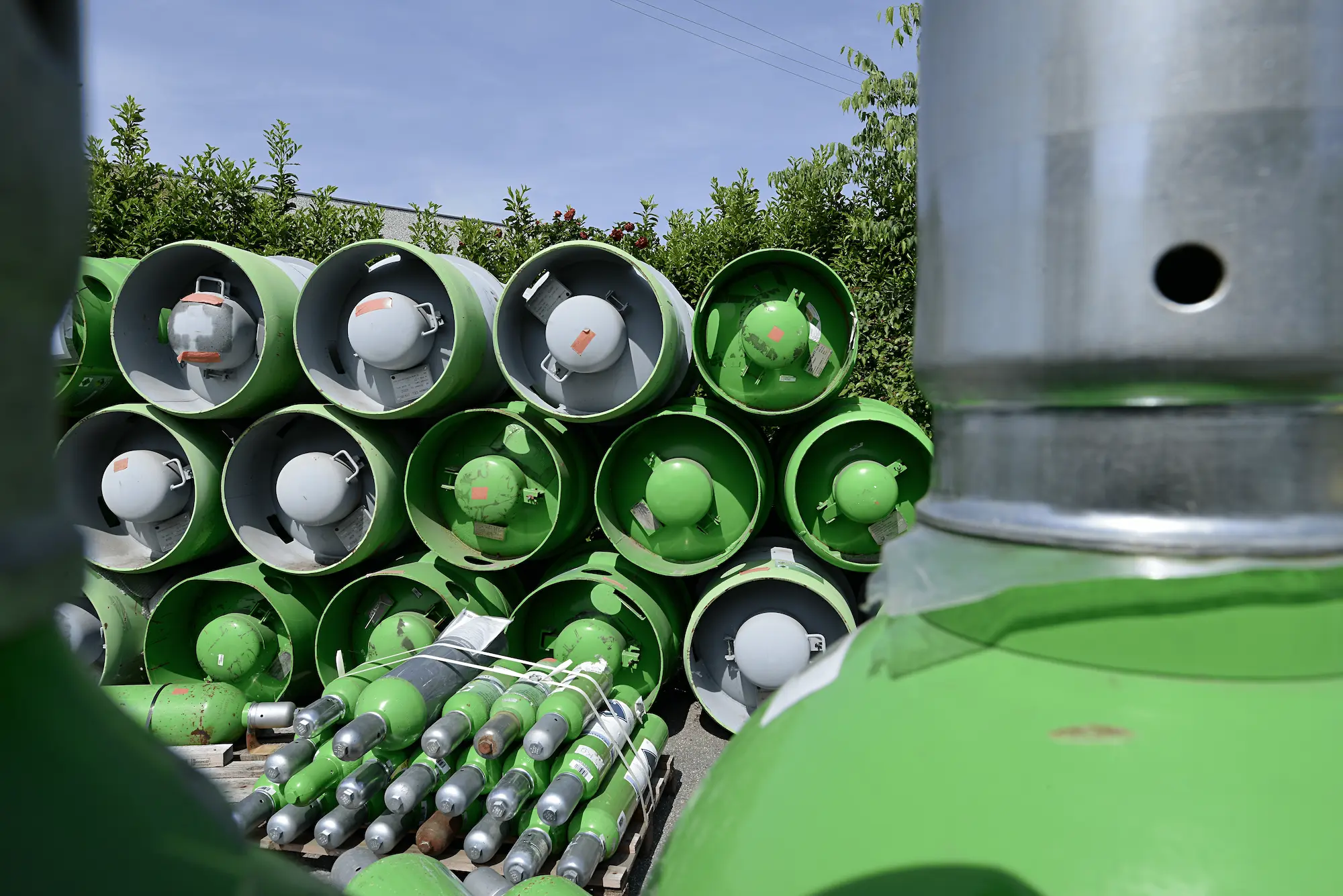
Cylinder Management and Logistics
Synecom offers a complete range of specialized services for the management of cylinders intended for the containment of SF₆ gas, ensuring maximum safety and regulatory compliance:
- Supply: Designed for containing SF₆ gas (virgin, regenerated, or spent), our cylinders are supplied complete with conformity certification.
- Flushing and Residual Treatment: We perform professional decontamination of gas residues contained within the vessels. At the end of the operations, we offer three return options:
- At atmospheric pressure (controlled pressure).
- In high vacuum (residual pressure below 20 mbar abs).
- With refilling (supply of new or regenerated SF₆ gas).
- Periodic Recertification: Service managed in collaboration with certified technical partners to guarantee the maintenance of safety standards.
- End-of-Life Management: Safe scrapping service for cylinders no longer fit for operation.

v
EU Regulation 2024/573 establishes strict constraints: the purchase, commercialization, and any activity of installation, maintenance, or handling of equipment containing fluorinated gases are reserved exclusively for companies and technical personnel in possession of official certifications.
Synecom supports its partners ensuring full adherence to these regulatory obligations. We offer specialist training courses on SF₆, designed to combine theoretical rigor and operational competence. Our programs, tailored to corporate needs, allow for the acquisition of the skills necessary to operate with maximum safety, efficiency, and in total compliance with the provisions of EU Regulation 2024/573.
Frequently Asked Questione
What you need to know
For specific requirements, contact our engineering team
How does EU Regulation 2024/573 affect the maintenance of existing SF₆ infrastructures?
Although the bans for new installations are already in place, the crucial deadline for existing plants is set for January 1, 2035. From that date, the use of virgin SF₆ for maintenance and repairs will be formally prohibited, except for rare technical exceptions. To guarantee the operational continuity of the grid and avoid sanctions, it is essential to plan the transition toward the use of regenerated and certified SF₆ today.
Does regenerated SF₆ guarantee the same technical performance as virgin gas?
Certainly. Synecom regenerated gas offers identical physical, thermal, and dielectric performance to the new product. Although the IEC 60376:2018 standard requires a baseline purity of 98.5%, our processing methods guarantee higher standards, with purities up to 99.9992% (Grade 5.2N). This allows utilities to eliminate their environmental footprint and protect themselves from carbon tax liabilities, without any compromise on plant safety.
Can technicians holding an F-gas license for refrigerants handle SF₆ equipment?
No. Pursuant to EU Regulation 2024/573, the certification required for handling sulfur hexafluoride (SF₆) is specific and distinct from common refrigerant gas licenses. Given the unique nature of SF₆, handling procedures and safety protocols require dedicated skills and qualifications. Every operator involved in installation or maintenance activities must hold the specific certification mandatory by law.
Why is industrial regeneration preferable to disposal via incineration?
Traditional disposal methods, such as thermal destruction, carry heavy environmental impacts. The combustion process generates CO₂ emissions and presents the critical risk of releasing unburnt SF₆ residues into the atmosphere. Synecom’s industrial regeneration eliminates these critical issues at the root, promoting a circular economy model that transforms a potential climate-altering waste into a high-performance resource, fully compliant with European sustainability goals.